University of Colombo Engages with NIRDC: Advancing Research and Development in Sri Lanka
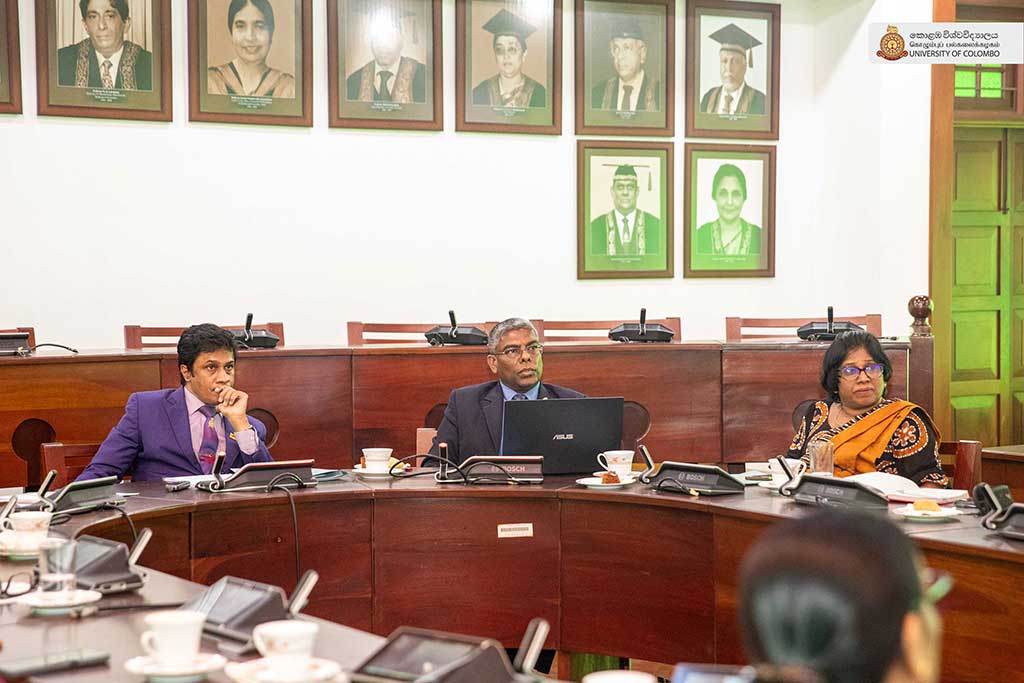
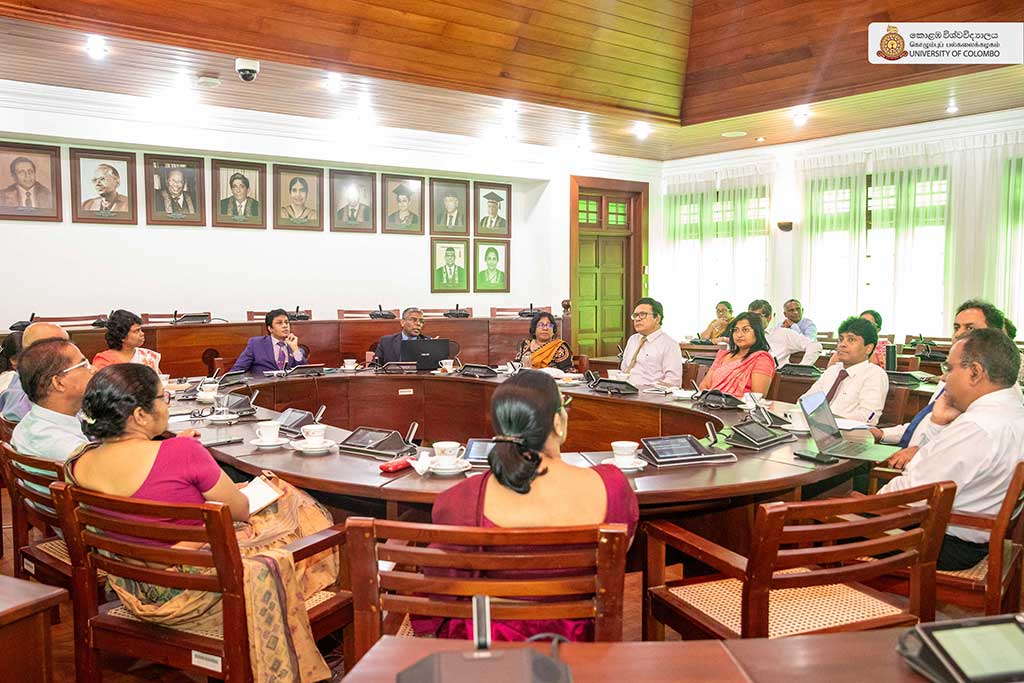
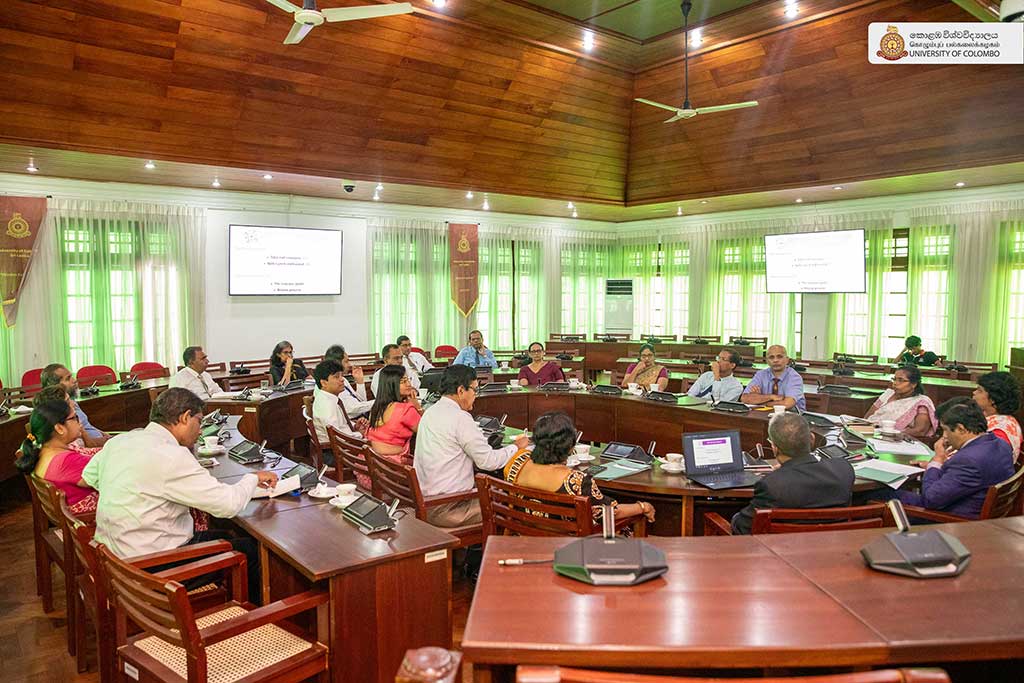
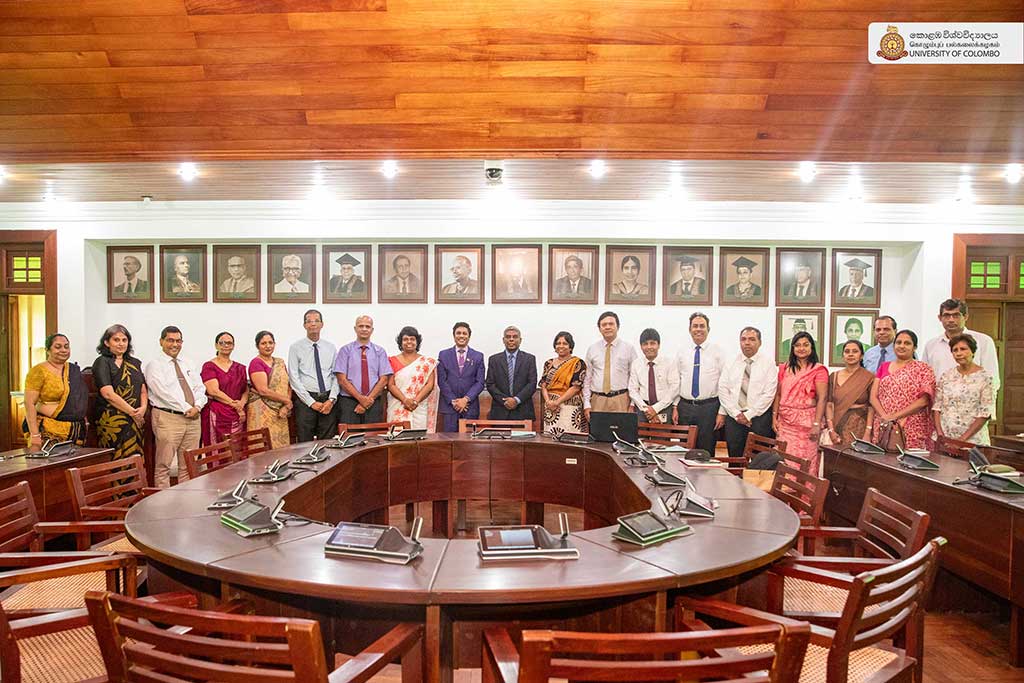
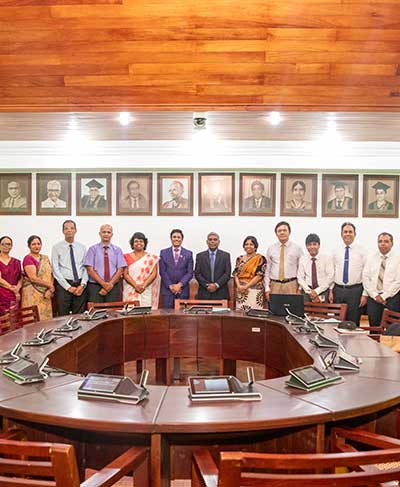
The University of Colombo hosted a high-level briefing on the emerging National Research & Development (R&D) and Commercialisation Framework with the Chair of the National Initiative for Research and Development Commercialisation (NIRDC), Professor Gomika Udugamasooriya, at the College House Premises on 29 December 2025. During his official visit to the University, Professor Udugamasooriya met Professor Indika Mahesh Karunathilake, Vice-Chancellor and Deans of all Faculties, engaging in an in-depth discussion on strengthening Sri Lanka’s national research ecosystem and accelerating pathways from university research to societal and economic impact.
Key Highlights of the Briefing
- Addressing systemic gaps in R&D: The briefing underscored long-standing challenges in Sri Lanka’s R&D landscape, including fragmented research efforts, limited national prioritisation, weak coordination among institutions, and the persistent “valley of death” where promising research fails to progress from late-stage development to market deployment.
- A new national commercialisation initiative: A flagship national initiative was presented, designed to bridge the gap between 60–90% completed research and commercial viability. The programme applies a rigorous, multi-stage evaluation process—covering technical merit, commercial feasibility, and national significamodelledeled on internationally recognised best practices.
- Strong response and early outcomes: The initiative has already attracted substantial interest, receiving over 370 applications across six thematic areas, including technology and AI, food and agriculture, environment, wellbeing, social development, and an open category. Initial funding decisions have supported high-impact projects such as a child-friendly internet solution, an environmentally friendly soil activation technology, and a sports innovation for youth development.
- Towards a unified national R&D framework: The commercialisation programme was presented as a pilot for a broader six-division national R&D policy framework, encompassing policy development, national prioritisation, project review, monitoring and evaluation, commercialisation, and social impact assessment. This structure aims to unify currently dispersed R&D governance mechanisms into a single, coordinated national system.
- Universities at the Centre of Innovation: Discussions emphasised the pivotal role of universities—particularly the University of Colombo—in driving national innovation. The need for enhanced R&D infrastructure, streamlined administrative support, and a cultural shift from a “publish-first” to an “IP-first” approach was highlighted, alongside reforms in intellectual property policy and legal frameworks to support commercialisation.
Professor Udugamasooriya also stressed the importance of nurturing innovation ecosystems within universities, addressing brain drain, and creating inclusive pathways for young and grassroots innovators.
The University of Colombo reaffirmed its commitment to aligning academic research with national priorities and to actively contributing to the evolving national R&D and commercialisation agenda. The engagement marked a significant step toward deeper collaboration between policymakers and the university sector in translating research excellence into tangible national development outcomes.